Safety Switches and Switchboard Upgrades: Why They Matter
We rely on electricity every day, but it can be dangerous if something goes wrong. That’s why safety switches (also known as RCDs or residual current devices) are an absolute must in any modern home or business. They’re those little switches usually found in your switchboard with a “T” or “Test” button on them.
Their job? Saving lives.
A safety switch constantly monitors the electric current flowing through circuits; if it senses even a tiny imbalance (like electricity leaking through a person who just touched a live wire), it cuts power within milliseconds to prevent electrocution.
In contrast, older-style circuit breakers or fuses only trip on large current overloads or short circuits – they won’t save you if, say, a faulty toaster is zapping you.
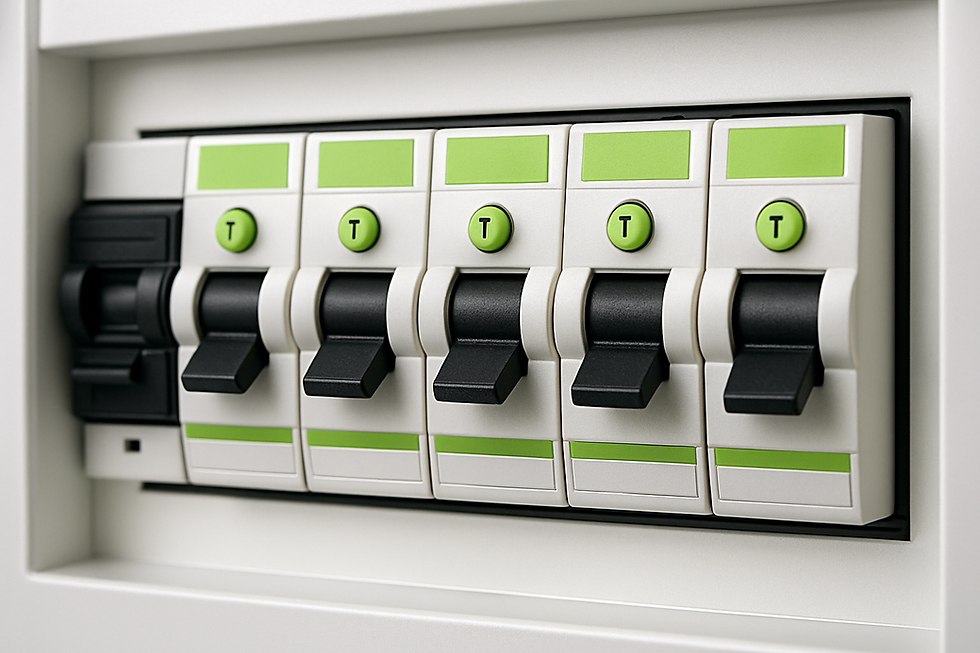
Does Your Home Have Adequate Protection?
If your home was built or rewired in the last 10-20 years, chances are you already have at least one safety switch installed (typically on the power circuits). However, older homes (especially pre-1990s) often lack RCDs or have only one for the whole house. Many Queensland houses still have old ceramic fuses or outdated switchboards that were never upgraded. It’s crucial to check your switchboard – if you see old-style fuses or no sign of RCD switches, it's time to act. Not only is this a safety risk, but it’s also now a legal requirement in many cases:
Owners of residential rental properties in QLD must have safety switches on every power circuit by law, with fines up to $1500 for non-compliance. And if you purchase an older home that doesn’t have any safety switches, Queensland law requires you to install them within 3 months.
Even newer homes can sometimes benefit from a switchboard upgrade. For instance, if you’ve added a lot of new electrical load (air conditioners, pool pumps, car chargers, etc.), you might find you’re running out of circuit capacity or your safety switch is nuisance-tripping because too much is on one circuit. A modern switchboard can be built with multiple RCDs (often one per circuit or per a couple of circuits) so that a single fault doesn’t black out your whole house. It can also include surge protectors to guard against power spikes, and better organization for future expansion.
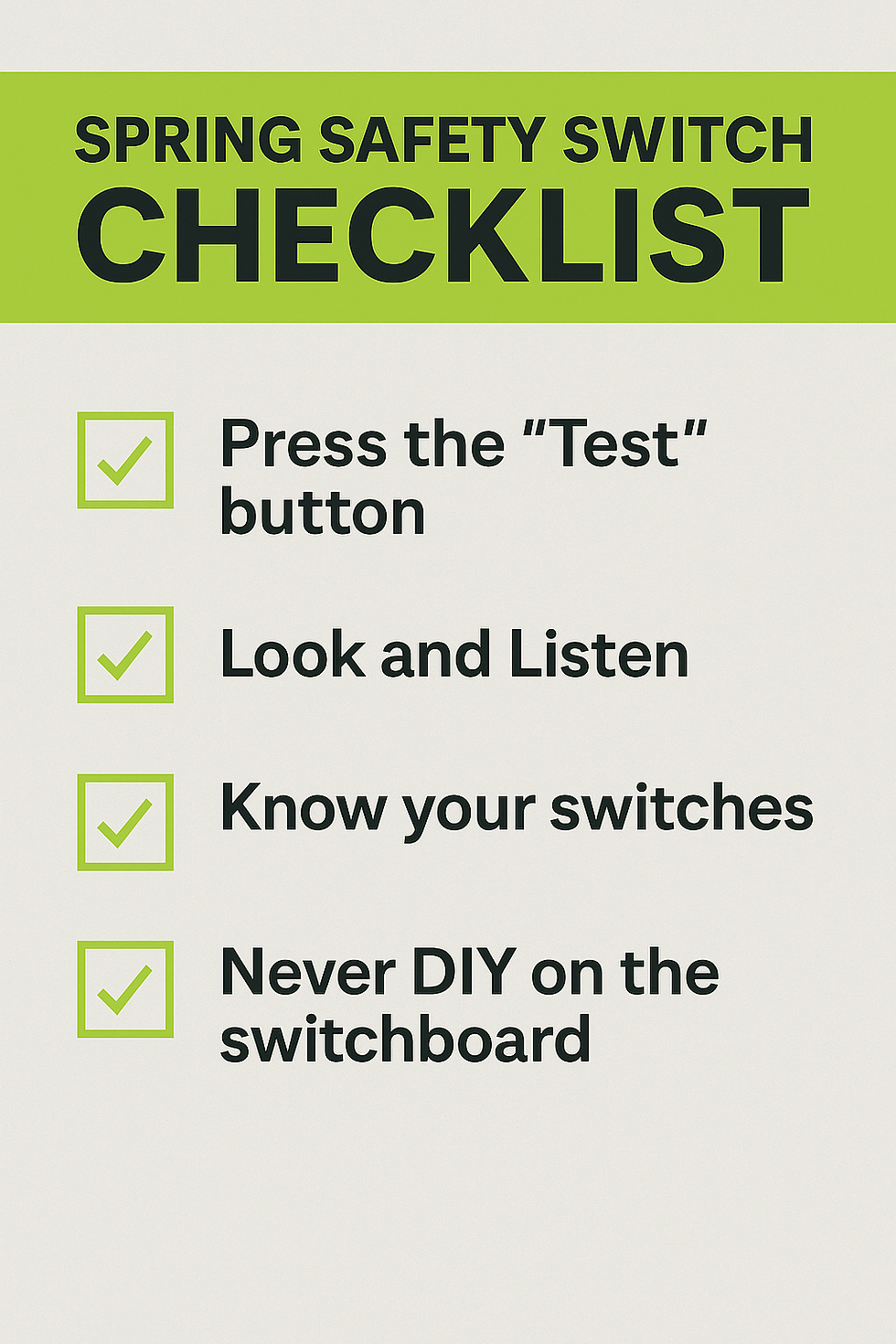
Spring Safety Switch Checklist
Maintaining your safety switches doesn’t require getting your hands dirty – but it does require a simple routine test:
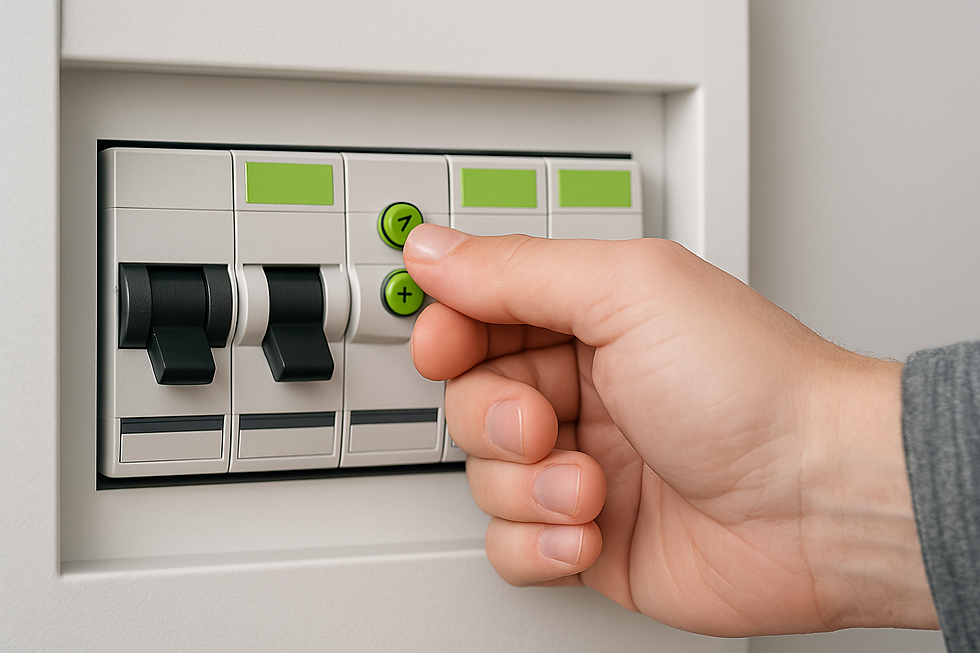
Press the “Test” button
Do this about every six months. Press the “T” or “Test” button on each safety switch in your switchboard. This should trip the switch instantly. This test simulates a fault and ensures the mechanism works. Afterward, you can flick it back on. If a safety switch doesn’t trip when you press Test, or it’s stuck, do not ignore it! That switch might not save you when you need it. Call an electrician to replace it immediately. Local authorities recommend testing safety switches every six months to ensure they’re working.
Look and listen
While you’re at the switchboard, look for any signs of overheating or burning (scorch marks, a smell of burned plastic, etc.). Also notice if any circuits trip frequently under normal use – that could be a sign of an underlying issue like an overloaded circuit or a faulty appliance. If your lights always trip a breaker when it rains, or the safety switch goes off whenever you use the toaster and microwave together, mention this to your electrician. It may indicate a need for an upgrade or some circuit re-balancing.
Know your switches
Ensure each circuit in your switchboard is labeled correctly (e.g., “Kitchen GPOs”, “Hot Water”, etc.). This not only helps you identify what went off if something trips, but also helps tradespeople working on your home. If you see a breaker or switch with no label or an unclear one, take a moment to trace it or get it labeled next time an electrician is around.
Never DIY on the switchboard
This is more of a warning than a task. Anything inside the switchboard (beyond just flicking switches) is strictly for licensed electricians. Replacing a fuse with the wrong wire, or installing an RCD yourself, is extremely dangerous and illegal. In QLD, all electrical installation work must be done by a licensed electrician; DIY electrical work is against the law. So if you suspect your board needs work, don’t attempt it on your own. Call a pro.
Time for an Upgrade?
How do you know if your switchboard is due for an upgrade? Here are a few tell-tale signs:
Old fuse panels
If your board still has pull-out fuses or very old-style breakers, upgrading to a modern circuit breaker panel with integrated RCDs is highly recommended. Old fuses can be fire hazards, and they provide nowhere near the level of protection a modern system does.
Limited or no safety switches
As mentioned, you should have safety switches protecting all the important circuits (ideally every circuit in modern standards). If you’ve only got one or none, upgrading is wise. Modern standards require RCD protection on most circuits in new work, so upgrading will bring your home up to today’s safety code.
Frequent tripping or electrical issues
If you’re often resetting breakers or replacing fuses, or if an extra appliance causes things to trip, your electrical system may be at capacity. A new switchboard with reorganized circuits can solve this.
Planned renovations or additions
Thinking of getting solar panels, a new air conditioner, or a home extension? It's often smart to upgrade the switchboard first, to ensure it can handle the extra circuits and to install necessary additions cleanly.

Upgrading a switchboard is not a DIY job – but for a qualified electrician like Nick, it’s a routine task. We can typically swap out an old fuse box for a brand-new, neat switchboard in half a day or so, with minimal downtime to your power. The result will be a safer home and peace of mind. Plus, Nick will ensure everything is labeled and explain the new setup to you, so you feel confident.
Safety First, Always
Electrical safety might not be the most glamorous spring topic, but it’s arguably the most important. Taking a moment to test your safety switches and consider the state of your switchboard can literally save lives. If you realize your home (or investment property, or business) isn’t up to scratch, don’t wait for an accident or an inspector’s fine. Get those upgrades done now – you’ll sleep better knowing your loved ones or tenants are protected.
Need help?
Nick at Suburban Electrical QLD is an expert in switchboard upgrades and safety switch installations. He’ll give you honest advice on what you need (no upselling fluff), fair pricing, and top-quality work. Remember, electrical safety is not a luxury; it’s a necessity. This spring, make sure your property is safely switched on!


