Smoke Alarm Checks and Upgrades: Keeping Your Home Safe
We hope you’ll never need them in an emergency, but smoke alarms are absolutely critical to home safety. House fires can happen to anyone, and having working smoke detectors dramatically improves your chances of surviving if the unthinkable occurs.
In fact, studies have found that having working smoke alarms can cut the risk of dying in a house fire roughly in half.
That’s a huge difference for such simple devices! This spring, take some time to give your smoke alarms a check-up, and make sure your home (or investment property) meets the latest requirements for fire safety.

New Laws in Queensland
You might have heard there were changes to smoke alarm laws in Queensland recently. It’s true – QLD now has some of the strictest (and smartest) smoke alarm regulations in Australia, aimed at saving lives. Here’s the nutshell:
For homeowners: By 1 January 2027, all existing homes in Queensland must have interconnected photoelectric smoke alarms in every bedroom, in hallways that connect bedrooms, and on each level of the homeqbcc.qld.gov.au. “Interconnected” means if one alarm triggers, they all sound together – giving everyone in the house an early warning.
For landlords/property managers: The rules kicked in earlier. Since 1 January 2022, every rental property in QLD must already comply with the above standardsqbcc.qld.gov.au. That means if you’re renting out a house or unit, you need those photoelectric, 10-year battery (or hardwired) interconnected alarms in all the right places now, not later. (If you’re a tenant, this is something to be aware of too – you have a right to a properly fitted out alarm system for your safety.)
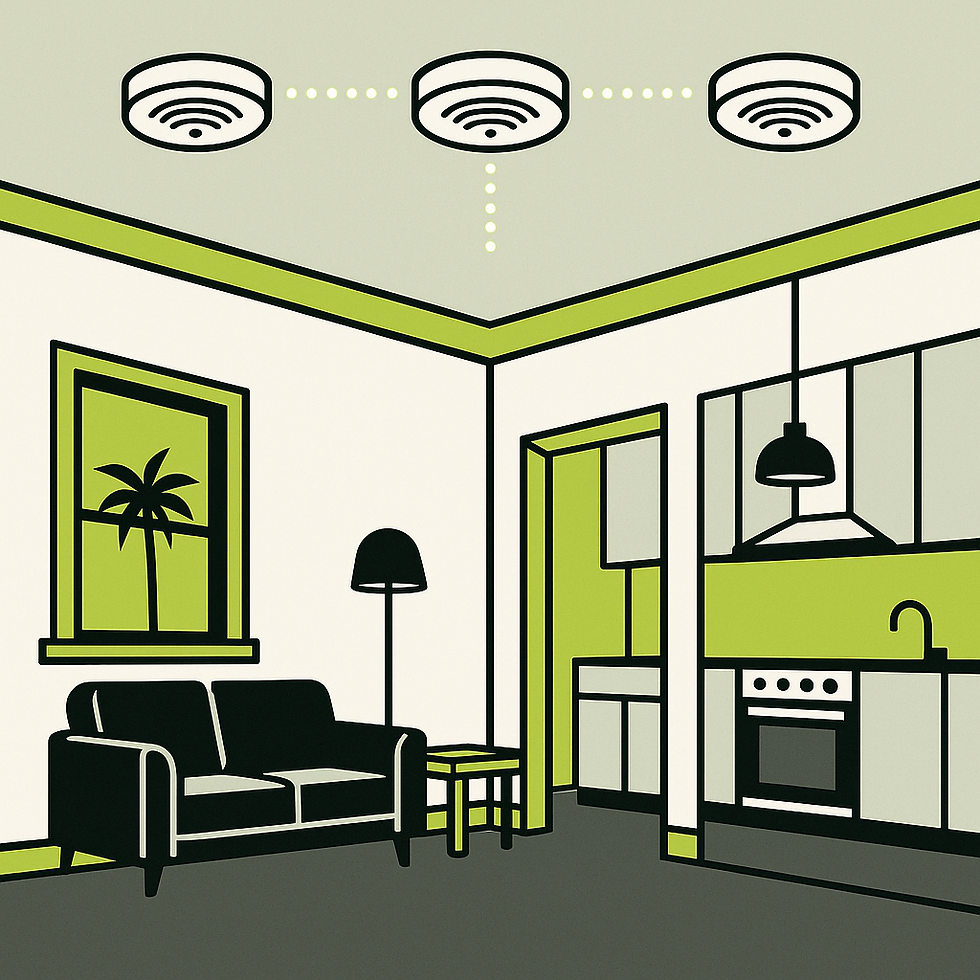
The types of alarms also matter. Photoelectric smoke alarms are the only type you should be using now – they are much quicker to detect the kind of smoky, smouldering fires that often happen in homes (like an electrical appliance sparking and slowly burning). The law explicitly requires photoelectric alarms (and specifically not the old ionisation type). If your alarms are a decade old or more, chances are they’re not photoelectric or may be past their useful life – so put this on your to-do list to replace them.
Spring Smoke Alarm Checklist
Make smoke alarm maintenance part of your seasonal routine. It doesn’t take long, and it can save lives (and also is often required by tenancy agreements and insurance policies). Here’s your to-do list:
Test each alarm: Press the test button on every smoke alarm in your home at least once a month (or at minimum, a few times a year). The alarm should sound loudly. If it doesn’t, or sounds weak, first replace the battery (if it’s a model with replaceable batteries). If it still doesn’t sound, the unit might be faulty or expired and should be replaced immediately.
Clean the alarms: Over time, dust and insects can interfere with a smoke alarm’s sensor. Gently vacuum the outside vents of the alarm, or use a soft brush, to remove dust. Do this a couple of times a year (many people do it when they’re doing spring cleaning). Queensland fire authorities note that alarms should be regularly cleaned and tested to ensure they work properlyqbcc.qld.gov.au. Keeping them clean also helps prevent false alarms in the middle of the night due to cobwebs or critters.
Check the expiry date: Yes, smoke alarms expire! Look on the unit for a manufacture date. If it’s more than 10 years old, or if you can’t find a date at all (which likely means it’s very old), it’s time to replace the alarm. The sensors lose effectiveness over time. Don’t gamble that an ancient detector will work when you need it.
Battery swap (if applicable): If your alarms use 9V backup batteries or AA batteries, the general rule is to replace those batteries once a year. A good tip is to do it every year on a memorable date (some do it when daylight savings changes, or on New Year’s). Many newer alarms have built-in 10-year batteries that you don’t need to replace – in fact, those are required now for new installations in QLD. But if yours still takes a removable battery, keep it fresh. And never disconnect an alarm or remove the battery just because of a chirping low-battery alert – change the battery instead! Removing the power defeats the whole purpose (and can be very dangerous).
Placement and interconnection: Take a minute to review if you have alarms in the right spots. You want them in each bedroom (especially if people sleep with doors closed), in hallways near bedrooms, and at least one per floor of the house. If you have a big multi-level home, you might need more. And importantly, if your alarms aren’t interconnected yet, strongly consider upgrading to that. Interconnection can be via wiring or wireless radio – an electrician can help set this up. It means if a fire starts in one end of the house, the alarm in your bedroom on the other end will still alert you. Without interconnection, by the time a hallway alarm goes off, the smoke might have already become quite thick in that far bedroom.

Upgrade Time? We Can Help!
If your smoke alarms aren’t up to the current standard, it’s a smart move (and possibly legally required) to upgrade them as soon as possible. Nick at Suburban Electrical QLD is very familiar with the Queensland smoke alarm requirements and can advise you on exactly what you need.
Typically, upgrades involve installing new photoelectric alarms with 10-year sealed batteries (or hardwired with battery backup) and linking them together. In many cases, the new units can be wireless interlinked, which saves having to run new cables through your ceiling.
Never skip professional help when hardwiring alarms – these devices must be installed correctly to be effective. Also, an electrician can issue you a compliance certificate if required, and make sure the placement meets legislation. For landlords, using a licensed professional is a must – it ensures you’re meeting your obligations and provides proof you took the right steps to keep tenants safe.
Remember, smoke alarms are there to protect what truly matters – lives. A small investment in maintaining and upgrading them can make all the difference in an emergency. So during your final spring cleaning blitz, don't overlook those little round lifesavers on the ceiling. Test them, clean them, and if you need new ones, take action. Your future self (and your family) will thank you.


