Why Brisbane Homes Need Modern Safety Switches (And How They Could Save Your Life)
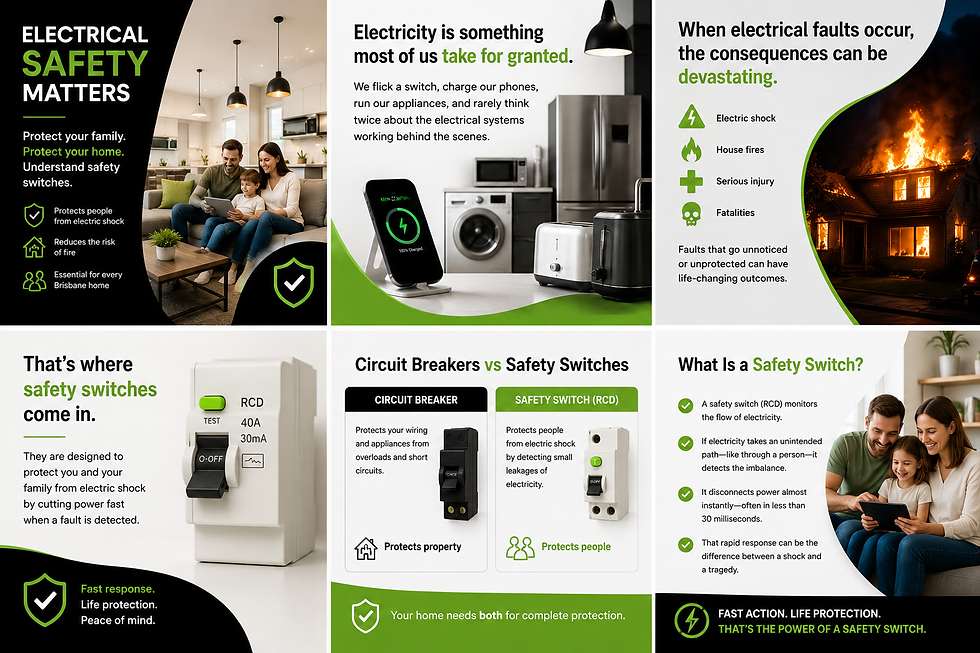
Electricity is something most of us take for granted. We flick a switch, charge our phones, run our appliances, and rarely think twice about the electrical systems working behind the scenes.
However, when electrical faults occur, the consequences can be devastating. Electric shock, serious injury, house fires, and even fatalities can result from faults that go unnoticed or unprotected.
That's where safety switches come in.
Many Brisbane homeowners assume their electrical system is adequately protected simply because they have circuit breakers installed. The reality is that circuit breakers and safety switches perform very different functions, and older homes throughout Brisbane may not have the level of protection modern families need.
In this guide, we'll explain what safety switches do, why they're so important, how Queensland regulations apply to your home, and the signs it may be time to upgrade your switchboard.

What Is a Safety Switch?
A safety switch, also known as a Residual Current Device (RCD), is designed to protect people from electric shock.
Unlike other electrical protection devices that focus on protecting wiring and appliances, a safety switch is specifically designed to protect human life.
It constantly monitors the flow of electricity through a circuit. Under normal conditions, the electricity flowing into a circuit should equal the electricity flowing out.
If a fault occurs and electricity starts flowing through an unintended path—such as through a person who touches a faulty appliance—the safety switch detects the imbalance and disconnects power almost instantly.
In many cases, this occurs in less than 30 milliseconds.
That incredibly fast response can mean the difference between a minor incident and a life-threatening electric shock.
Safety Switches vs Circuit Breakers: What's the Difference?
One of the most common misconceptions homeowners have is believing that circuit breakers and safety switches are the same thing.
They are not.
Circuit Breakers Protect Your Home's Wiring
Circuit breakers are designed to protect electrical wiring from overloads and short circuits.
For example:
Too many appliances operating on one circuit
Faulty wiring causing excessive current flow
Short circuits creating dangerous electrical conditions
When these situations occur, the circuit breaker trips and disconnects power to prevent damage to the electrical system and reduce fire risk.
Safety Switches Protect People
Safety switches focus on detecting leakage current that could indicate electricity is flowing through a person or another unintended path.
If someone receives an electric shock from a faulty appliance or damaged wiring, the safety switch is designed to disconnect power immediately.
Think of it this way:
Circuit breakers protect your property.
Safety switches protect your family.
Ideally, every home should have both.
Why Older Brisbane Homes May Not Have Adequate Protection
Brisbane has many beautiful older homes, including Queenslanders, post-war homes, and properties built throughout the 1960s, 70s, and 80s.
While these homes often have plenty of character, their electrical systems may not meet today's safety standards.
Many older switchboards were installed before modern safety switch requirements became common.
Common issues we find in older Brisbane homes include:
No safety switches installed
Safety switches protecting only some circuits
Outdated ceramic fuses
Ageing switchboards
Limited circuit protection
Electrical systems that have been modified over decades
Even if a home has undergone renovations, portions of the original electrical infrastructure may still be in place.
As households become increasingly reliant on technology, electrical demand has grown significantly. Modern homes commonly run:
Multiple televisions
Computers and home offices
Air conditioning systems
Kitchen appliances
Smart home devices
Chargers for phones, tablets and laptops
Older switchboards were never designed to support this level of electrical usage.

Queensland Safety Switch Requirements
Queensland has some of Australia's strongest electrical safety laws.
While requirements vary depending on the age and type of property, modern regulations generally require safety switch protection on power and lighting circuits in new homes and many renovated properties.
Safety switch requirements can also apply when:
Building a new home
Performing significant electrical renovations
Selling certain properties
Installing new circuits
Rental properties have additional obligations to ensure electrical systems remain safe for tenants.
It's important to understand that compliance requirements can change over time, and every property is different.
The safest approach is to have a licensed electrician inspect your switchboard and explain what protections are currently installed.
Why Safety Switches Matter More Than Ever
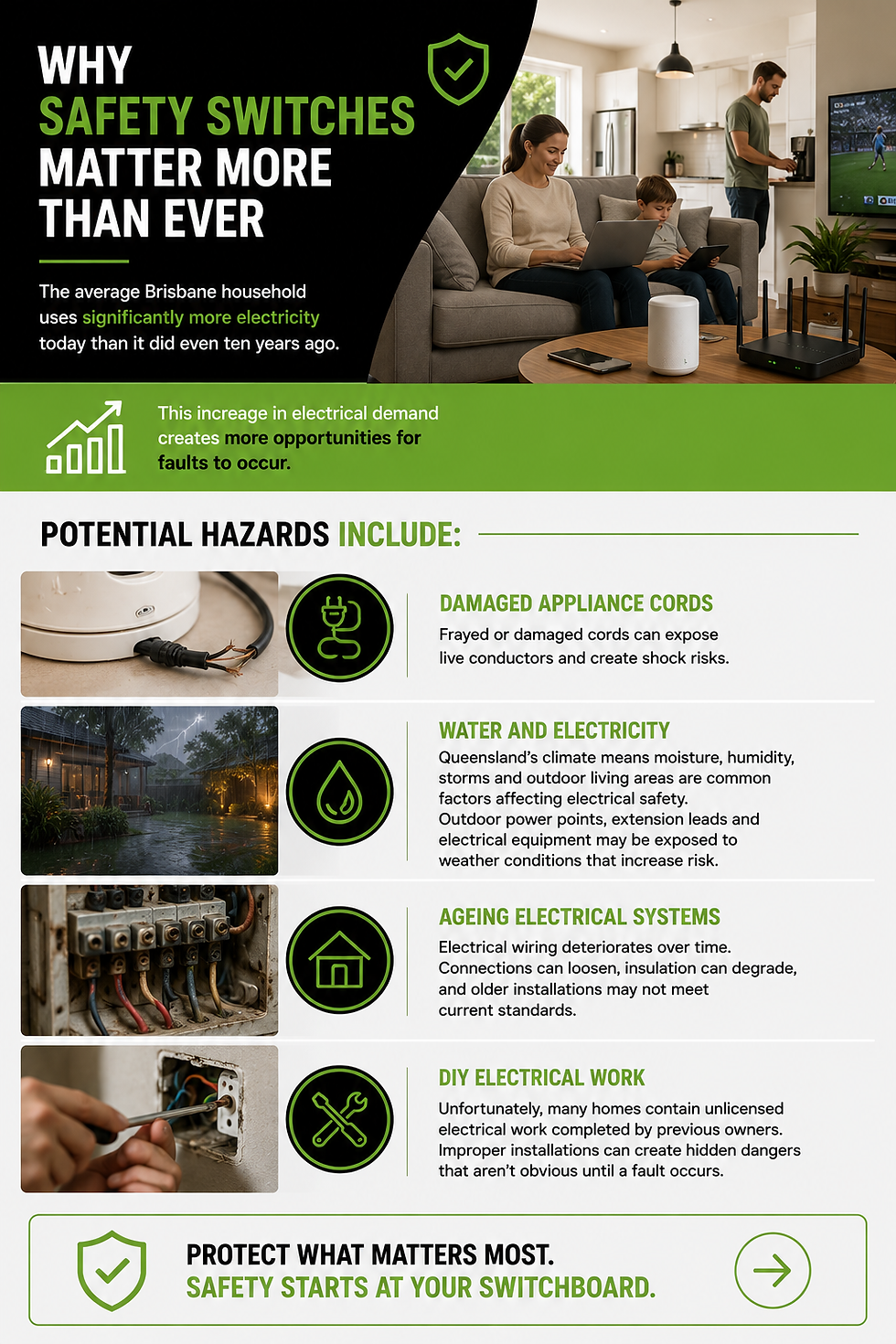
The average Brisbane household uses significantly more electricity today than it did even ten years ago.
This increase in electrical demand creates more opportunities for faults to occur.
Potential hazards include:
Damaged Appliance Cords
Frayed or damaged cords can expose live conductors and create shock risks.
Water and Electricity
Queensland's climate means moisture, humidity, storms and outdoor living areas are common factors affecting electrical safety.
Outdoor power points, extension leads and electrical equipment may be exposed to weather conditions that increase risk.
Ageing Electrical Systems
Electrical wiring deteriorates over time.
Connections can loosen, insulation can degrade, and older installations may not meet current standards.
DIY Electrical Work
Unfortunately, many homes contain unlicensed electrical work completed by previous owners.
Improper installations can create hidden dangers that aren't obvious until a fault occurs.

Common Signs Your Switchboard May Need Upgrading
Your switchboard is the heart of your home's electrical system.
If it's outdated, it may not provide the protection modern households require.
Some warning signs include:
Frequent Tripping
If circuits regularly trip, it may indicate overloaded circuits, faulty wiring or an ageing switchboard.
Ceramic Fuses
Older ceramic fuse systems are a strong indicator that your electrical infrastructure may be due for upgrading.
Flickering Lights
Lights that flicker consistently may point to electrical issues that warrant investigation.
Burning Smells
Any burning smell near electrical equipment should be treated as urgent.
Warm Switchboard Components
Switchboards should not become excessively hot during normal operation.
Renovations Without Electrical Upgrades
If your home has been renovated but the switchboard remains original, it may no longer be suitable for your household's electrical demands.
Limited Safety Switch Coverage
Some homes have safety switches protecting only selected circuits.
Modern protection often involves broader coverage across power and lighting circuits.

Safety Switch Benefits for Families
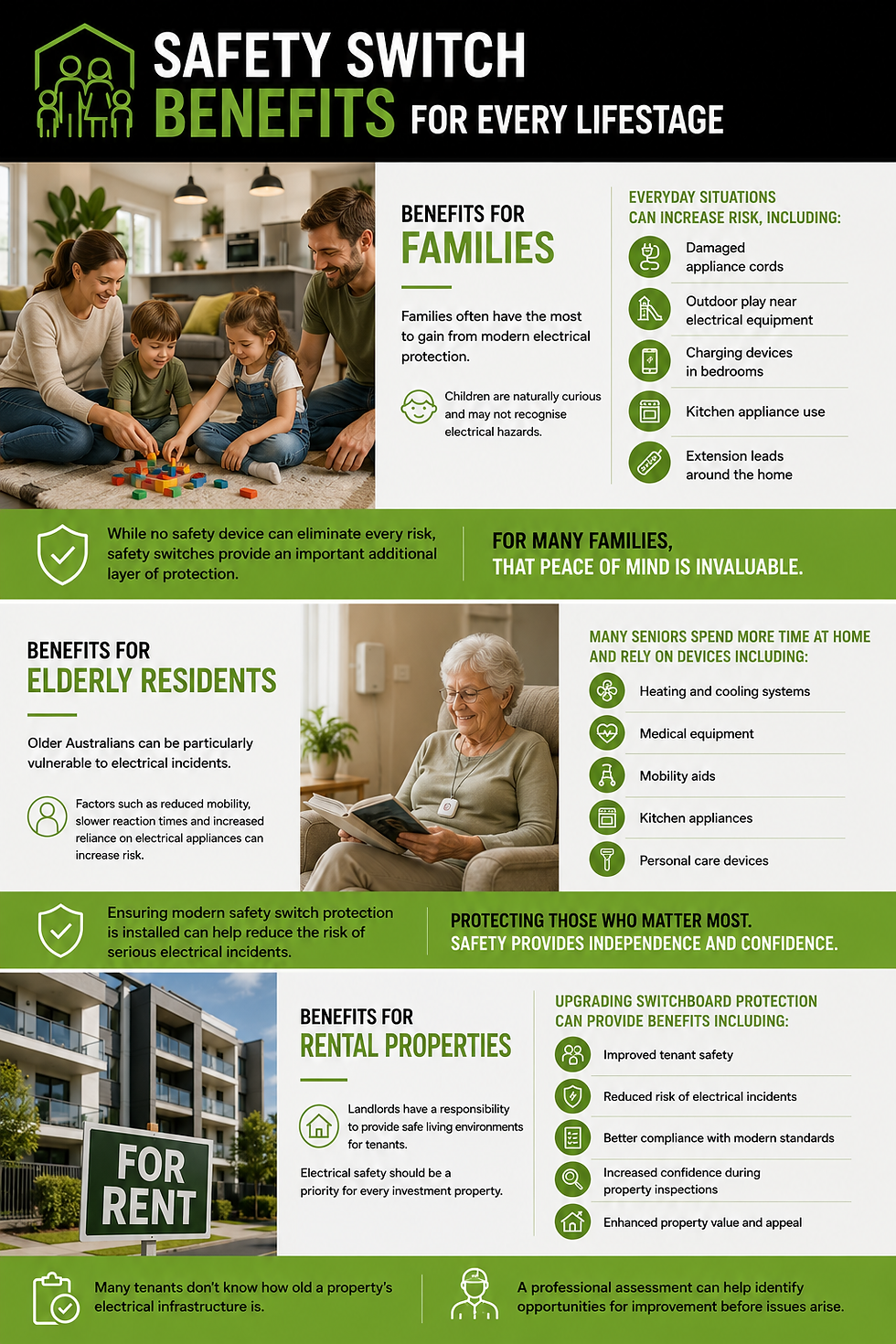
Families often have the most to gain from modern electrical protection.
Children are naturally curious and may not recognise electrical hazards.
Everyday situations can increase risk, including:
Damaged appliance cords
Outdoor play near electrical equipment
Charging devices in bedrooms
Kitchen appliance use
Extension leads around the home
While no safety device can eliminate every risk, safety switches provide an important additional layer of protection.
For many families, that peace of mind is invaluable.
Benefits for Elderly Residents
Older Australians can be particularly vulnerable to electrical incidents.
Factors such as reduced mobility, slower reaction times and increased reliance on electrical appliances can increase risk.
Many seniors spend more time at home and rely on devices including:
Heating and cooling systems
Medical equipment
Mobility aids
Kitchen appliances
Personal care devices
Ensuring modern safety switch protection is installed can help reduce the risk of serious electrical incidents.
Benefits for Rental Properties
Landlords have a responsibility to provide safe living environments for tenants.
Electrical safety should be a priority for every investment property.
Upgrading switchboard protection can provide benefits including:
Improved tenant safety
Reduced risk of electrical incidents
Better compliance with modern standards
Increased confidence during property inspections
Enhanced property value and appeal
Many tenants don't know how old a property's electrical infrastructure is.
A professional assessment can help identify opportunities for improvement before issues arise.
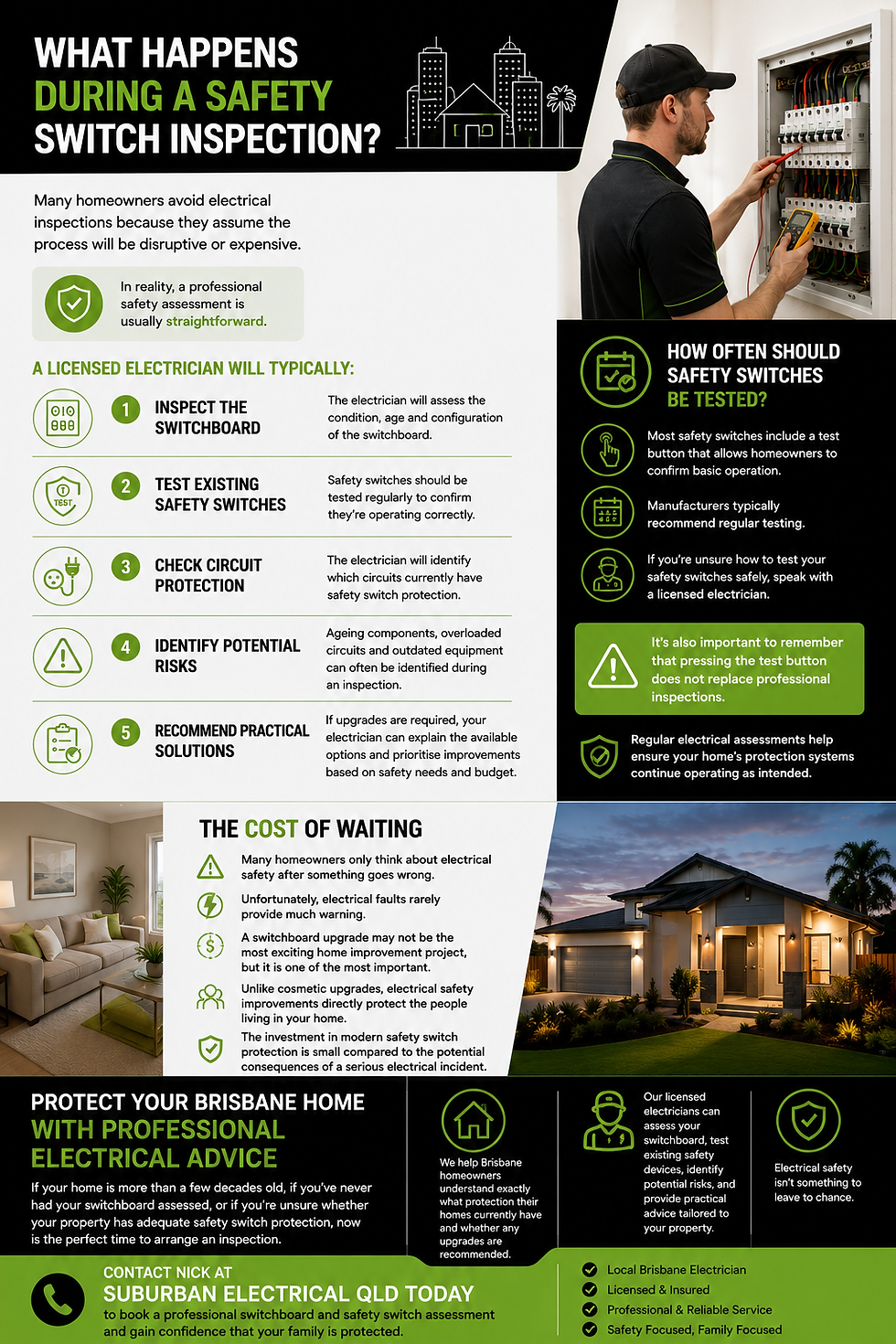
What Happens During a Safety Switch Inspection?
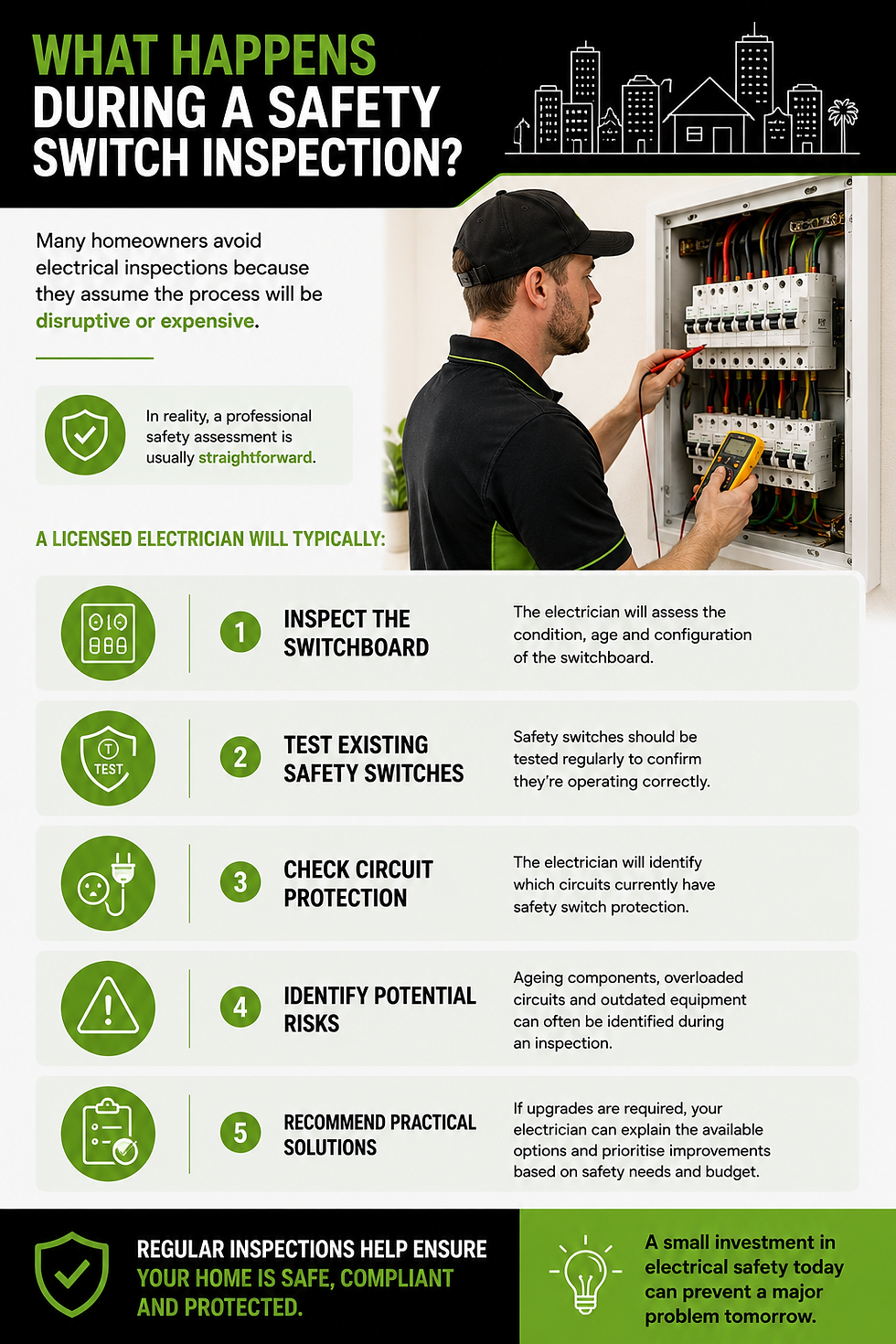
Many homeowners avoid electrical inspections because they assume the process will be disruptive or expensive.
In reality, a professional safety assessment is usually straightforward.
A licensed electrician will typically:
Inspect the Switchboard
The electrician will assess the condition, age and configuration of the switchboard.
Test Existing Safety Switches
Safety switches should be tested regularly to confirm they're operating correctly.
Check Circuit Protection
The electrician will identify which circuits currently have safety switch protection.
Identify Potential Risks
Ageing components, overloaded circuits and outdated equipment can often be identified during an inspection.
Recommend Practical Solutions
If upgrades are required, your electrician can explain the available options and prioritise improvements based on safety needs and budget.
How Often Should Safety Switches Be Tested?
Most safety switches include a test button that allows homeowners to confirm basic operation.
Manufacturers typically recommend regular testing.
If you're unsure how to test your safety switches safely, speak with a licensed electrician.
It's also important to remember that pressing the test button does not replace professional inspections.
Regular electrical assessments help ensure your home's protection systems continue operating as intended.
The Cost of Waiting
Many homeowners only think about electrical safety after something goes wrong.
Unfortunately, electrical faults rarely provide much warning.
A switchboard upgrade may not be the most exciting home improvement project, but it is one of the most important.
Unlike cosmetic upgrades, electrical safety improvements directly protect the people living in your home.
The investment in modern safety switch protection is small compared to the potential consequences of a serious electrical incident.
Protect Your Brisbane Home with Professional Electrical Advice
If your home is more than a few decades old, if you've never had your switchboard assessed, or if you're unsure whether your property has adequate safety switch protection, now is the perfect time to arrange an inspection.
At Suburban Electrical QLD, we help Brisbane homeowners understand exactly what protection their homes currently have and whether any upgrades are recommended.
Our licensed electricians can assess your switchboard, test existing safety devices, identify potential risks, and provide practical advice tailored to your property.
Electrical safety isn't something to leave to chance.
Contact Nick at Suburban Electrical QLD today to book a professional switchboard and safety switch assessment and gain confidence that your family is protected.